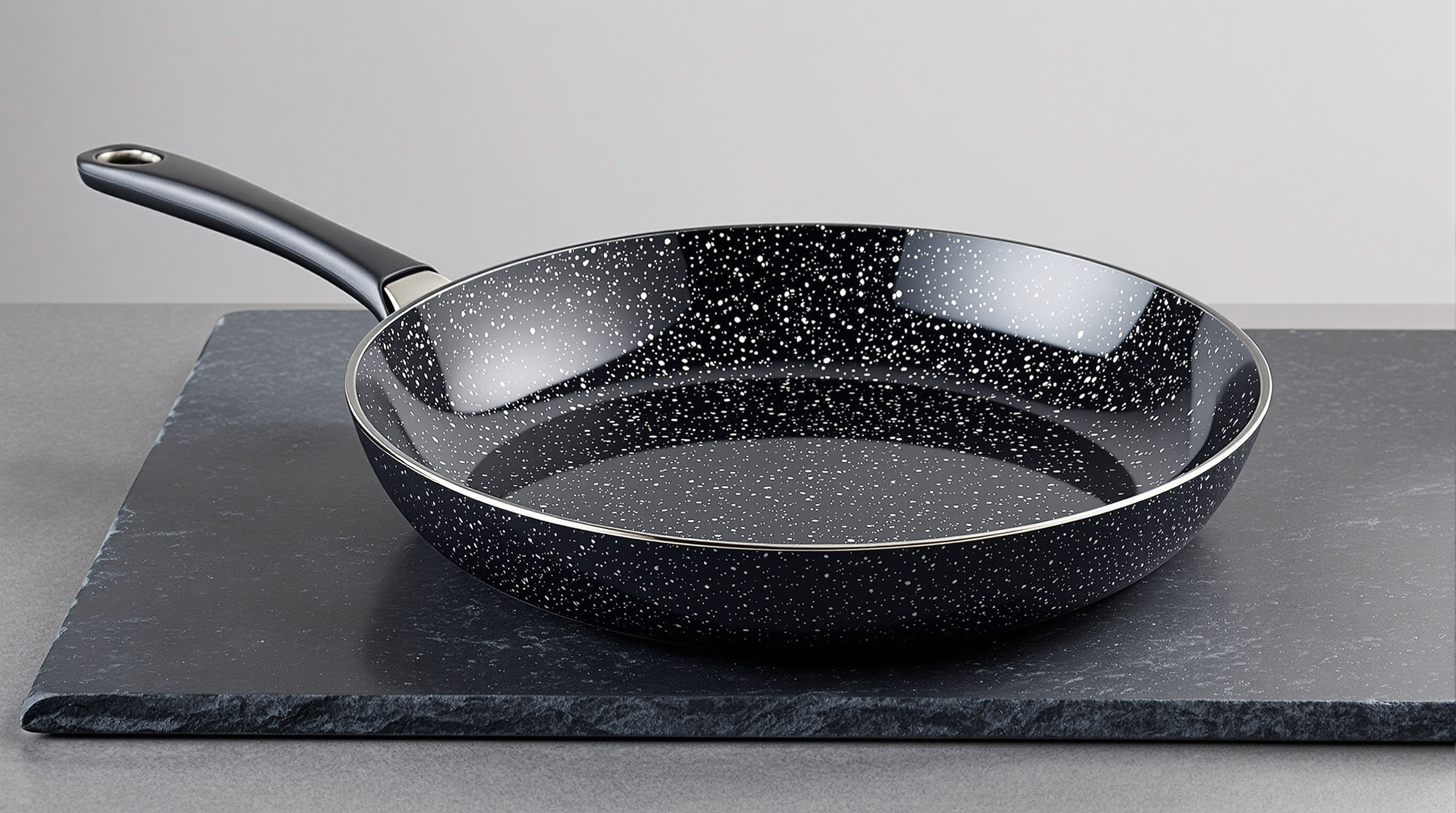
Non-stick pans that advertise diamond-infused coatings promise the easy release of non-stick with extra toughness. There is real science behind the idea, along with a fair bit of marketing. Here is a straight, brand-neutral look at what these pans deliver.
How Diamond-Infused Coatings Work
Manufacturers blend tiny diamond particles into the non-stick layer. Diamond is both extremely hard and an excellent conductor of heat, so the claims are twofold: a more scratch-resistant, longer-lasting surface, and faster, more even heat across the pan. Many of these pans pair the diamond particles with a ceramic base coat, making them a durable, often PTFE-free hybrid.
Durability Claims vs Reality
The reinforcement is genuine — a diamond-infused surface generally resists scratches and wear better than a plain ceramic coating, and some are marketed as metal-utensil safe. That said, “harder” is not “indestructible.” The kindest thing you can do for any non-stick pan is still to treat it gently. Independent of the coating, high dry heat and abrasive cleaning shorten its life.
Getting the Most From One
- Even if the pan claims metal-utensil safety, softer tools cause less wear — wood or silicone are safest.
- Cook on low to medium heat; the diamond conductivity means you rarely need high settings.
- Hand-wash and let the pan cool before cleaning.
- Avoid aerosol cooking sprays, which can build up and dull the surface.
Are Diamond Pans Worth It?
For many cooks, yes — with realistic expectations. The reinforcement genuinely helps a coating shrug off everyday wear, and the improved heat conduction means more even browning at lower settings. What a diamond coating cannot do is defy physics: no non-stick surface lasts forever, and treating one roughly will wear it out no matter what particles are in the mix. Think of the diamond content as buying yourself a longer, more durable working life rather than an indestructible pan.
Signs It Is Time to Replace
Any non-stick pan has a service life. Retire yours when food starts to stick despite oil, when you can see the coating scratched, flaking or worn through to the metal, or when the surface is badly warped and no longer sits flat. A pan that has reached this stage will only frustrate you — and a warped base wastes heat on every hob.
Who They Suit
A diamond-reinforced pan is a good middle ground if you like the idea of ceramic non-stick but want more durability, and you are happy to pay a little more for it. If your priority is the absolute longest life, seasoned cast iron and carbon steel still win — compare all the options in our PTFE-free non-stick guide and the wider pots and pans guide. For classic sol-gel ceramic, see our ceramic non-stick guide.