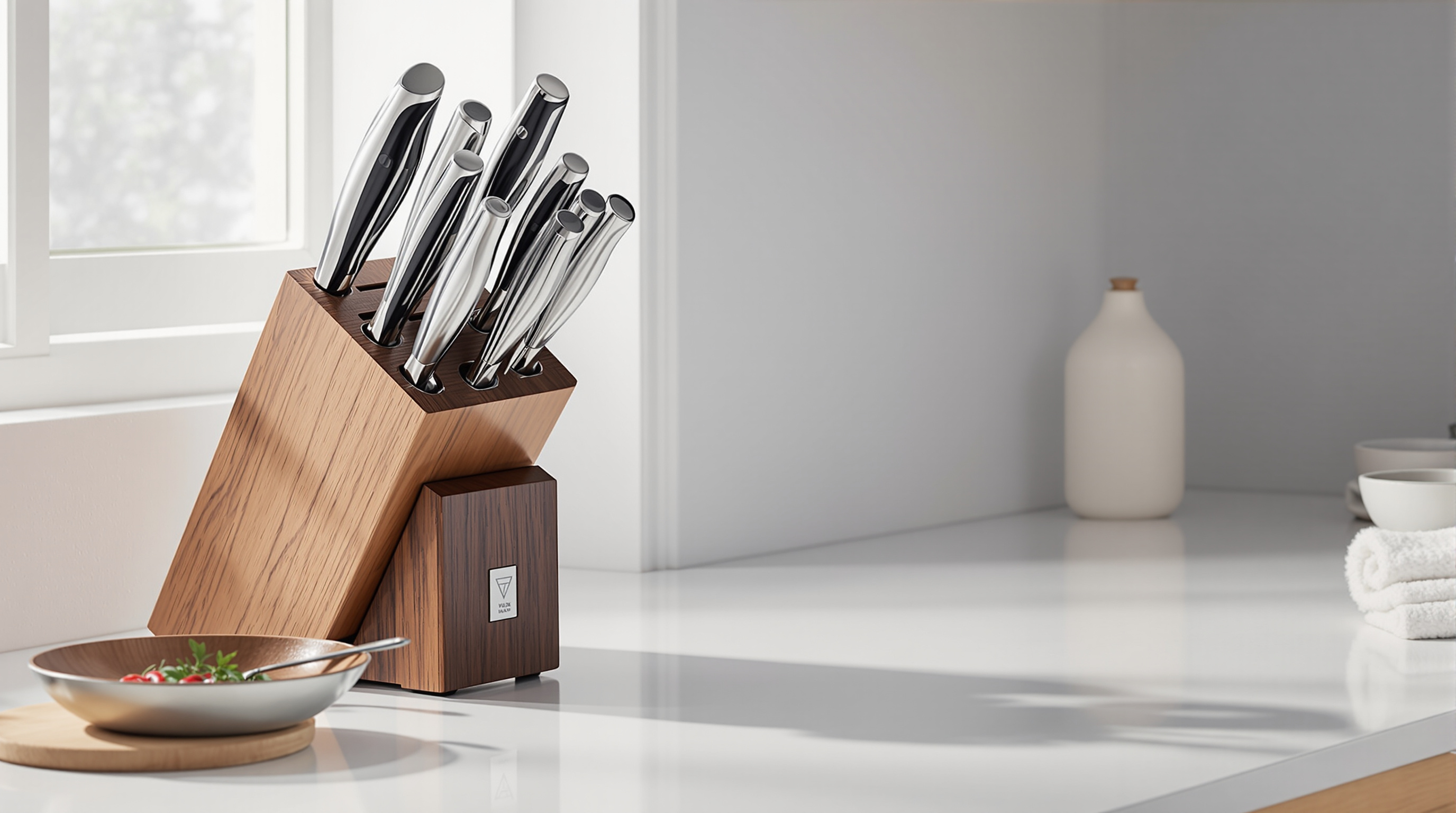
A matching knife set is a tidy, cost-effective way to equip a kitchen — but only if the pieces are ones you will actually use. Here is how to judge a set on its merits rather than the number of knives on the box.
Which Pieces Really Matter
Ignore the piece count and look for the blades that earn their keep every day:
- Chef’s knife — does 80% of the work; the single most important piece.
- Paring knife — for peeling and fine detail.
- Serrated bread knife — for bread, tomatoes and other soft-skinned foods.
- Utility knife and, optionally, a santoku or carving knife.
- Kitchen shears and a honing steel — genuinely useful extras.
A block full of steak knives can pad the count without adding much value. Fewer, better blades usually beat a crowded set.
Forged vs Stamped
Forged blades are shaped from a single billet of hot steel; they tend to be heavier, stiffer and often carry a bolster, and they usually cost more. Stamped blades are cut from a sheet of steel; they are lighter and more affordable, and modern stamped knives can perform very well. Heft is a matter of taste, not simply quality — many cooks prefer a nimble stamped knife.
Balance, Tang and Comfort
Pick up the chef’s knife and see where it balances — ideally near the bolster or the front of the handle, so it feels like an extension of your hand. A full tang (steel running the length of the handle) adds durability and balance. Above all, the grip should feel secure and comfortable; you will hold it for hours over its lifetime.
Storage: Block, Strip or Drawer
Sets often come with a storage block, which protects edges and keeps knives handy. Alternatives include a wall-mounted magnetic strip (space-saving and easy to see) or an in-drawer knife tray. Whatever you choose, storing blades loose in a drawer dulls and chips them — and is a hazard when you reach in.
Set Sizes Explained
Knife sets are usually described by piece count, but that number can be misleading because it often includes the block and the steel. Here is how the common sizes really break down:
- Starter (3–5 pieces) — typically a chef's knife, a paring knife and a serrated knife, sometimes with a utility knife. Genuinely all most home cooks need.
- Mid-size (6–10 pieces) — adds a santoku, a carving or utility knife, shears and a honing steel, plus the block.
- Large (12+ pieces) — the extra count is usually a set of steak knives. Lovely if you want them, but not more kitchen capability.
Judge a set by the quality of the core three or four blades, not by the headline number.
Caring for Your Set
A good set will last decades if you look after it. Hand-wash and dry the blades immediately rather than leaving them in the sink or dishwasher, hone them regularly with the steel that comes in most blocks, and have them properly sharpened once or twice a year. Keep them stored in their block, on a strip or in a tray — never loose in a drawer. Our honing guide walks through the weekly maintenance that keeps every knife in the set ready to work.
A Set, or Build Your Own?
A quality set is convenient and visually coordinated, and it is usually cheaper than buying each knife separately. But if you already own a good chef’s knife, buying the two or three additional blades you actually need can be smarter than replacing everything. Either way, match the knives to your cooking, learn to keep them sharp with our guide to honing a chef’s knife, and read our helpful guide to kitchen knives for the fundamentals of steel and care.